What does a typical gin bottle look like?
Gin packaging has been reshaped by the craft gin boom. Because the spirit is clear and many brands sell similar styles, the bottle has become the main way to signal personality.
Common traits of gin bottles:
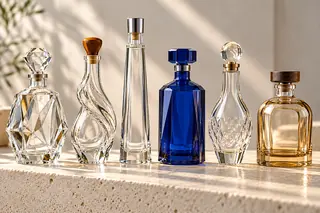
- Clear or lightly tinted glass: super flint for a clean look, or tinted and coated glass in blue, green or pink tones.
- Round or square heavy-base bodies: a thick base adds weight and a premium feel.
- Botanical or geometric embossing: juniper, citrus or a crest molded into the shoulder or base.
- Decorative stoppers: wood, glass or metal heads on a synthetic cork shank.
- Back-of-bottle printing: artwork printed on the inside face, visible through the front.
A square spirits bottle with embossed base is a practical starting point for gin because it gives flat print panels and comes in 500, 700 and 750 ml.
What does a typical rum bottle look like?
Rum bottles cover more ground than gin, because the category runs from white rum to dark and spiced rums.
- Squat round bottles: short, wide and stable, a nod to traditional shipping bottles.
- Tall round bottles: common for white and premium aged rums.
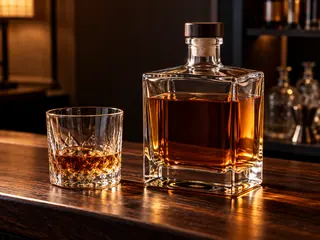
- Clear glass for aged rum: amber and mahogany colors read as quality.
- Coated bottles: opaque white, black or colored finishes for spiced and flavored rums.
Cool rum bottles often draw on nautical and island themes: rope textures, seals, maps or hand-drawn labels. For aged rums, a cordial-style extra flint spirits bottle in 700 or 750 ml lets the color do the work.
What sizes do rum and gin bottles come in?
Both spirits follow general liquor sizing. Your bottle size depends on where you sell.
| Size | US fl oz | Typical use for rum and gin |
|---|---|---|
| 50 ml | 1.7 | Miniatures, tasting sets, hotel bars |
| 200 ml | 6.8 | Gift sets, trial size |
| 375 ml | 12.7 | Half bottle, small-batch releases |
| 500 ml | 16.9 | Craft gin and some EU markets |
| 700 ml | 23.7 | Standard for UK and EU |
| 750 ml | 25.4 | Standard for the US |
| 1 L | 33.8 | Duty-free, bars |
Craft distillers often start with a 500 ml or 700 ml bottle for their home market and add a 750 ml version for the US. For allowed sizes in each market, see the liquor bottle sizes guide.
Which glass and color suit rum and gin?
The right glass depends on whether the liquid is part of the story.
| Glass option | Best for | Trade-off |
|---|---|---|
| Super flint | Gin, white rum, aged rum | Higher cost than standard flint |
| Standard flint | Value brands | Slight green tint on thick bases |
| Spray-coated color | Flavored gin, spiced rum, white rum bottles | Hides the liquid; coating must be durable |
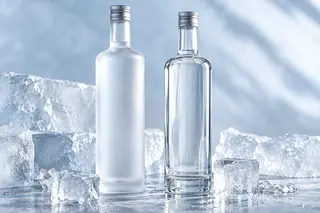
| Frosted | Gin, white rum | Hides small marks; softer graphics |
| Furnace-colored glass | Signature brand colors | Usually larger minimum orders |
Rum in a white bottle is usually clear glass with a white spray coating or a heavy white screen print. Opaque coatings hide the liquid level, so make sure the fill height is consistent and consider a clear window if consumers want to see how much is left.
Printing directly on glass suits both spirits, especially gin, where artwork on the back panel can be seen through the liquid. Our guide to screen printing glass bottles explains colors, registration and costs.
Which closures work best on rum and gin bottles?
Most craft gins and premium rums use a bar-top stopper. The head is the first thing a customer touches, so brands choose it carefully.
- Wood heads: natural and warm, common on rum.
- Glass heads: a clean, apothecary look that suits gin. A glass-head synthetic cork stopper in 19.5 or 21.5 mm is a popular choice.
- Zinc alloy heads: weight and detailed metal logos.
Aluminum ROPP and screw caps remain common on value and high-volume products because they apply faster and include tamper evidence. Whatever you choose, the cork shank must suit the bottle's bore. Our cork stoppers guide covers sizing and testing.
What makes a rum bottle cool or unusual?
Unusual rum bottles take the squat, sturdy rum silhouette and push it further: barrel-shaped bodies, skull and pirate themes, faceted surfaces or heavily embossed seals. Gin brands experiment with tall, narrow towers, apothecary-style bottles and geometric facets.
Old rum bottles inspire many of these designs. Surviving bottles from the 18th and 19th centuries are often dark green or near-black glass, hand-blown and irregular. Modern versions recreate the feel with squat custom molds, applied-seal embossing and dark matte coatings while keeping modern capacity accuracy and neck finishes.
Every new shape needs a custom mold and checks on filling, labeling and packing. Our article on unique liquor bottle designs explains how to keep an unusual bottle practical.
How much does it cost to package a bottle of gin or rum?
When brand owners ask about gin bottle price or rum bottle price, they usually mean the cost of the empty packaging, not retail. A typical cost stack per bottle:
- Glass bottle: stock 500–750 ml spirits bottles in our catalog have reference FOB prices of about $0.22 to $0.80 each.
- Closure: a few cents for a metal cap, more for a cork stopper with a custom head.
- Decoration: each screen print color, decal or coating adds a step and cost.
- Gift packaging: a gin gift box or rum tube adds structure and shelf impact.
- Freight and duties: depend on volume, Incoterms and destination.
For gifting, a kraft paper cylinder gift tube for 750 ml spirits is a lighter alternative to a rigid box.
What should you check before ordering rum or gin bottles?
A good bottle of gin or rum on the shelf is also a bottle that runs well on your line. Before you place a volume order, confirm these points with your supplier:
- Capacity and fill height: the brimful capacity must leave headspace for your fill level, and the fill line should look the same on every bottle.
- Neck finish and bore: get the drawing and match it to your stopper or cap.
- Label or print area: check that the flat or cylindrical panel suits your label size and applicator.
- Glass weight and dimensions: confirm height, diameter and weight against your filler, case and pallet plan.
- Decoration durability: test coatings and prints against handling, ice buckets and alcohol spills.
- Samples: approve a production sample with your actual spirit and closure before mass production.
Key takeaways
- Rum and gin bottles are 750 ml (25.4 fl oz) in the US and 700 ml (23.7 fl oz) in the EU.
- Gin bottles rely on clarity, embossing and decorative stoppers because the spirit is clear.
- Rum bottles are often squat and round; white rum bottles are usually spray-coated clear glass.
- Super flint glass shows aged rum color and clear gin best; coatings hide the liquid.
- Bar-top corks dominate craft gin and premium rum; ROPP and screw caps suit high-volume lines.
- Packaging cost per bottle includes glass, closure, decoration, box and freight.
How Mars Glass can help
Mars Glass supplies stock and custom spirits bottles, cork stoppers, caps and gift tubes from Shanghai, with screen printing, decals, frosting, spray coating, hot stamping and embossing. Stock samples are available, and stock spirits bottles start at 5,000 pieces on many items.
- Contact us with your target size and closure for a quote within one business day.
- Browse our spirits bottles to compare stock shapes.
Frequently asked questions
What size is a standard bottle of rum or gin?
In the US, rum and gin are usually sold in 750 ml bottles, about 25.4 US fl oz. In the UK and EU the standard is 700 ml, about 23.7 fl oz. Both spirits also come in 50 ml, 200 ml, 375 ml, 1 liter and larger formats.
Why are gin bottles often colored or heavily decorated?
Gin is a clear spirit, and many craft gins compete in a crowded category, so the bottle carries the brand. Colored coatings, botanical embossing, heavy bases and decorative stoppers help a gin stand out without changing the liquid.
Why do some rums come in white bottles?
A white rum bottle is usually clear glass that has been spray coated or printed opaque white. It creates a clean, distinctive look and also hides the liquid, which some brands prefer for spiced or flavored rums.
How much does the glass bottle for a gin or rum cost?
Stock 700 to 750 ml spirits bottles typically cost roughly $0.22 to $0.80 per piece at factory level, depending on weight, glass clarity and finish. A cork stopper, decoration, a gift box and freight are added on top, so total packaging cost per bottle can be several times the glass price.
What did old rum bottles look like?
Many surviving rum bottles from the 18th and 19th centuries are dark green or almost black glass, hand-blown with uneven walls and squat, sturdy shapes. Modern brands sometimes borrow these cues with squat bottles, embossed seals and dark coatings.
Do gin bottles need a cork stopper?
No. Gin can be sealed with a screw cap, ROPP cap or bar-top cork. Many craft gins use a synthetic cork stopper with a wood, glass or metal head because it feels premium and allows easy re-closing.