What makes a liquor bottle unique?
Cool liquor bottles rarely change everything at once. The most memorable ones pick one strong idea and execute it well.
| Design lever | Examples | Typical route |
|---|---|---|
| Silhouette | Faceted, sculpted, flat, ring, extra tall | Custom or modified mold |
| Glass color | Cobalt blue, green, black-look, white | Furnace color or spray coating |
| Surface | Frosted, textured, embossed, ribbed | Mold texture, acid etch or coating |
| Closure | Oversized wood, glass or metal stopper | Custom stopper head |
| Decoration | Multi-color print, metallic foil, decals | Screen printing, decals, hot stamping |
A strong rule of thumb: if the silhouette is unusual, keep decoration simple; if the bottle is a stock shape, put the effort into color and decoration.
What are the parts of a bottle?
Knowing the parts of a bottle helps you brief a designer and a factory precisely.
- Finish: the top of the neck that the closure seals onto. Its dimensions decide which cork or cap fits.
- Neck: height and diameter affect pouring, stopper choice and neck labels.
- Shoulder: a prime place for embossing, facets or a printed band.
- Body: the main label or print panel; flat panels are easiest to label.
- Heel: the curve to the base; a sharp heel looks crisp but is weaker than a rounded one.
- Base and punt: a thick base adds weight and sparkle; a recessed punt or embossed base adds detail.
Many unusual spirit bottles change only the shoulder and base, keeping a standard finish so stock closures still fit.
Which unusual bottle shapes work for spirits?
Faceted and crystal-look bottles
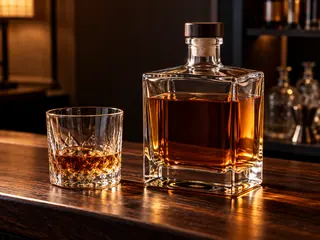
Facets catch light like cut crystal and suit clear spirits. A faceted super flint liquor bottle with cork stopper shows how a stock mold can deliver this effect without custom tooling.
Sculpted and figurative bottles
Skulls, animals, instruments and architectural forms are among the most searched awesome alcohol bottles. They are fully custom molds and often use heavy clear glass so the form reads clearly. Our animal-shaped glass decanter, 750 ml is an example of a sculpted design.
Flat, ring and extra-tall bottles
Flat flask shapes pack efficiently and give a large print area. Ring or circle bottles create an instant silhouette but need careful support in cartons. Extra-tall bottles look elegant but must fit fillers, shelves and shipping cases.
Giant bottles
Giant liquor bottles of 3 liters and more are popular for bars, events and retail displays. They need dedicated molds, thicker walls and their own packing, and many fillers cannot handle them. Treat a giant bottle as a separate project with its own sampling, rather than a scaled-up version of your standard bottle.
The closure as a design element
A distinctive stopper can make a stock bottle feel unique. Oversized wooden heads, glass heads, heavy zinc alloy heads with a molded logo or a colored cap that matches the label all change how the bottle looks and feels in the hand. Because the closure is a separate part, it is often the quickest and cheapest place to add personality. Check that a heavy or tall stopper does not make the bottle top-heavy or push it past your shelf or carton height.
How do you make blue, green, black or white liquor bottles?
There are two routes to colored glass bottles.
Furnace color. The color is in the glass itself. Flint, amber and green are common production colors. Cobalt blue glass bottles and very dark, near-black glass are possible but usually need a dedicated run, so minimums are higher. Old green glass bottles and old colored glass bottles that collectors seek were almost always furnace colored.
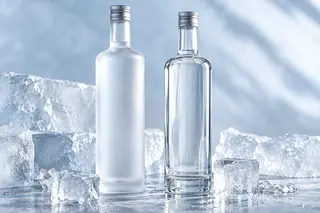
Spray coating. Clear glass is coated after forming in any color, opaque or translucent, with matte, gloss, gradient or metallic finishes. This is how most black glass bottles, white liquor bottles and bright colors are made in moderate volumes. Our spray-coated glass liquor bottle, 750 ml has a 10,000-piece MOQ.
The popular blue and white liquor bottle look combines both ideas: a white coating with a blue printed or decal pattern, inspired by hand-painted ceramics.
Which decoration techniques create fancy liquor bottles?
Decoration turns a stock bottle into a fancy liquor bottle at a fraction of the cost of a new mold.
- Screen printing: sharp, durable graphics fired or cured onto the glass.
- Decals: fine detail and photographic or multi-color art.
- Frosting: satin surface, often with clear windows.
- Hot stamping: metallic gold, silver or colored foil accents.
- Embossing: raised logos or patterns formed in the mold.
Our glass bottle decoration methods guide compares durability and cost. For numbered editions and individual names, see engraved and personalized liquor bottles.
How do you keep a unique bottle manufacturable?
Glass is formed hot in a mold, so some shapes are harder to make well than they look on a screen. Discuss these points with the factory before approving a drawing:
- Radii, not sharp edges: very sharp corners and edges can be weak and form unevenly.
- Even wall thickness: large flat panels and deep recesses can lead to thin spots.
- Undercuts: deep overhangs may not release from the mold.
- Stability: the bottle should stand firmly when full and when nearly empty.
- Filling and closure: the neck finish should match your filler and a standard closure if possible.
- Packing: irregular shapes need custom dividers or inserts.
Our guide on designing a custom spirits bottle walks through the drawing, sampling and approval process step by step.
How much does a unique liquor bottle cost?
Cost depends on which route you choose:
- Stock shape plus decoration: lowest cost and fastest; only decoration setup is added.
- Modified stock mold: for example, adding your embossed logo; a modest tooling cost.
- Full custom mold: a one-time mold cost, sampling time and usually a higher MOQ.
For reference, stock spirits bottles in our catalog run from about $0.22 to $0.80 per piece FOB before closure and decoration, with MOQs from 5,000 pieces on many items. Our guide to glass bottle MOQ and lead times explains how quantities and timelines change for custom work.
Do the same ideas work for decorative glass jars?
Yes. Decorative glass jars and decorative bottles for candles, food gifts or home goods use the same levers: color by coating, frosting, embossing and printed patterns, plus a distinctive lid. A black lid on a clear jar or a green coating on a stock jar can create a premium look without a new mold. Browse our glass jars for stock shapes.
Key takeaways
- Strong designs change one or two levers: silhouette, color, surface, closure or decoration.
- Learn the parts of a bottle so you can brief shoulder, base and finish details precisely.
- Cobalt blue and near-black furnace glass need dedicated runs; spray coating is the flexible route.
- Decoration on a stock mold is the cheapest way to create a fancy liquor bottle.
- Have the factory review custom shapes for wall thickness, undercuts, stability and packing.
How Mars Glass can help
Mars Glass makes custom molds from a drawing or reference bottle, sends samples before mass production and decorates bottles by screen printing, decals, frosting, spray coating, hot stamping and embossing. Production is checked against the approved sample with photos and measurements.
- See our customization options for molds and decoration.
- Contact us with your sketch or reference bottle for a quote within one business day.
Frequently asked questions
What makes a liquor bottle unique?
A liquor bottle stands out through five main levers: its silhouette, the color of the glass, the surface texture, the closure and the decoration. Most memorable bottles change one or two of these strongly rather than all five at once.
What are the parts of a glass bottle?
From top to bottom, a bottle has a finish (the lip the closure seals onto), a neck, a shoulder, a body, a heel and a base, which may have a recessed punt. Each part can carry design details such as embossing, facets or a heavy base.
How are blue glass liquor bottles made?
Blue liquor bottles are made either from glass colored in the furnace, such as cobalt blue, or from clear glass that is spray coated blue after forming. Furnace color is permanent and rich but usually needs a dedicated production run; coating works on standard clear molds at lower quantities.
Why are some liquor bottles green?
Green glass is one of the standard furnace colors, used for centuries for wine and spirits because it was economical and offers some protection from light. Today some brands also choose green for heritage looks or brand color, either as green glass or as a coating on clear glass.
How much does a custom-shaped liquor bottle cost?
Unit prices for custom spirits bottles are often in a similar range to heavy stock bottles, roughly under $1 per piece at factory level for many designs, but you also pay a one-time mold cost and usually need a higher minimum order. Complex shapes, coatings and multi-color decoration add to the unit price.
Can a unique bottle shape cause production problems?
Yes. Sharp corners, deep undercuts, very thin sections and unstable bases can lead to weak spots, uneven glass, slow filling or breakage. A factory should review the drawing for manufacturability before the mold is cut.