What types of cork stoppers are there?
| Type | Material | Removed with | Typical use |
|---|---|---|---|
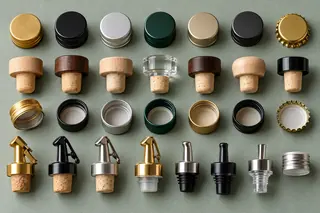
| Natural cork | Single piece of cork oak bark | Corkscrew | Premium still wines for aging |
| Technical / agglomerated cork | Cork granules bonded together, sometimes with natural cork discs | Corkscrew | Everyday and mid-price wines, sparkling wines |
| Synthetic wine cork | Molded or extruded food-grade plastic | Corkscrew | Wines for early drinking |
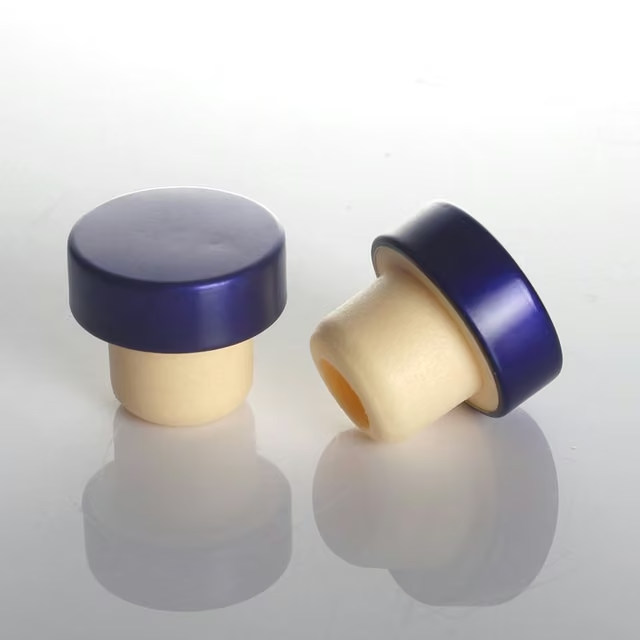
| Bar-top (T-stopper) | Natural, agglomerated or synthetic shank plus a head | Hand | Spirits, liqueurs, oils, gifts |
| Glass stopper | Glass with a plastic sealing ring, or ground glass | Hand | Premium wine, decanters, gift bottles |
| Reusable wine stopper | Silicone, rubber, metal or wood | Hand | Resealing an opened bottle |
Sparkling wine uses its own mushroom cork and wire cage, explained in our champagne and sparkling wine bottles guide.
What are wine corks made of?
Natural cork comes from the bark of the cork oak, grown mainly around the western Mediterranean. The bark is stripped by hand without felling the tree and regrows; after the first harvests, it is typically taken about every nine years. Cork is light, compressible and springs back, which is why it seals a glass neck so well.
Technical corks are made from cork granules bonded with a food-grade binder. Better grades are treated to reduce the risk of TCA (2,4,6-trichloroanisole), the compound that causes the musty "corked" smell. Synthetic corks are made from food-grade plastics and have no TCA risk at all, but their oxygen transmission varies by type and grade.
Screw cap vs cork: which is better for wine?
This is a closure decision you make together with the bottle, because the two need different neck finishes. A cork-finish bottle has a smooth bore; a screw cap wine bottle has an external thread for a long-skirt aluminum cap, commonly about 30 × 60 mm (1.18 × 2.36 in). You cannot put a screw cap on a cork-finish bottle, or vice versa.
| Factor | Natural or technical cork | Synthetic cork | Screw cap |
|---|---|---|---|
| Cork taint (TCA) risk | Low to very low with treated grades | None | None |
| Bottle-to-bottle consistency | Varies, best with technical corks | High | Very high |
| Oxygen ingress | Low and gradual | Higher for some types | Set by the liner, from very low to moderate |
| Opening | Corkscrew | Corkscrew | Hand twist, easy to reseal |
| Consumer perception | Traditional, premium in many markets | Neutral | Accepted widely, strong in some markets |
| Bottling equipment | Corker | Corker | Capping head for the cap size |
| Long aging | Proven over many decades | Usually not chosen | Increasingly used, depends on liner |
In practice:
- Choose a screw cap for aromatic whites, rosé and everyday reds that should taste fresh and consistent, or where buyers value easy opening.
- Choose natural or premium technical cork for wines positioned on tradition and long aging, or for markets where cork is expected at your price point.
- Choose synthetic cork when you want a corkscrew ritual at low cost for wines consumed young.
Mars Glass supplies an embossed aluminum-plastic screw cap for wine bottles (MOQ 10,000 pieces) for screw-finish bottles.
What size cork do you need?
The cork must be wider than the bore so it compresses and grips. Wine bottle bores are typically about 18.5 mm (0.73 in) at the mouth, and straight wine corks are usually 24 mm (0.94 in) in diameter, compressed by the corker on insertion. Home winemakers know this as a #9 cork (15/16 in).
Cork stopper size chart
| Cork or stopper | Diameter | Length | Notes |
|---|---|---|---|
| Straight wine cork, short | 24 mm (0.94 in) | 38 mm (1.5 in) | Wines for early drinking |
| Straight wine cork, standard | 24 mm (0.94 in) | 44 mm (1.73 in) | Most still wines |
| Straight wine cork, long | 24 mm (0.94 in) | 49–54 mm (1.93–2.13 in) | Wines for aging |
| Bar-top shank | 19.5 mm (0.77 in) | Varies | Many spirits and liqueur bottles |
| Bar-top shank | 21.5–22.5 mm (0.85–0.89 in) | Varies | Wider-bore spirits bottles |
Bar-top shank size depends on the bottle's bore diameter and its tolerance, so do not choose from a chart alone. Ask for the bore drawing and test samples; our neck finishes guide explains how bar-top finishes are specified and why fit testing matters.
Which bar-top stoppers suit spirits and gift bottles?
Bar-top stoppers let the consumer reseal a spirits bottle many times, and the head is a branding surface. Heads are made of wood, acrylic, glass or zinc alloy, and can be printed, embossed, colored or engraved. Synthetic shanks are popular because they are consistent and taint-free; natural and agglomerated shanks suit brands that want a natural material.
Examples from our range:
- A 19.5 mm synthetic T-cork stopper for wine and spirits, MOQ 3,000 pieces.
- A 21.5 mm synthetic bar-top cork stopper for spirits, MOQ 3,000 pieces.
- A round glass-head synthetic cork stopper in 19.5–22.5 mm, MOQ 1,000 pieces.
Check extraction force at warm and cold temperatures: a stopper that is easy to pull at 20 °C (68 °F) may stick in a cold warehouse or loosen in heat.
What about glass bottles with cork or glass stoppers?
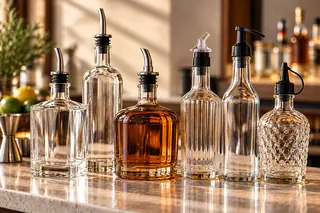
Glass bottles with cork stoppers are used well beyond wine and spirits: small cork bottles for favors and samples, oil bottles, reed diffusers, and glass jars with cork lids for dry foods and bath products. Mini cork bottles of 50 to 100 ml are popular for gifts; our round glass liquor bottle with cork runs from 50 ml to 1 L in one style.
Glass stoppers give a fully glass look. Simple ground-glass stoppers are traditional on decanters but do not seal tightly for long storage. Glass stoppers with a plastic sealing ring seal better and are used on some premium wine and spirits bottles. Decanters with glass stoppers are better suited to serving than to long-term storage.
Corks are a friction seal, so they are not airtight or tamper-evident on their own. For food, oils and products that need a tight or tamper-evident seal, add a shrink capsule or neck seal, or choose a screw or pourer closure instead.
Are reusable wine stoppers worth offering?
Reusable wine stoppers and bottle stoppers reseal an opened bottle for a few days. Silicone and rubber stoppers grip a range of bores, vacuum stoppers remove some air, and decorative wine stoppers with wood, metal or glass tops are popular gifts and branded merchandise. For a winery shop or a gift set, a T-shaped reusable bottle stopper with a wood or aluminum-plastic top can carry your logo.
How should corked bottles be stored and shipped?
Store bottles with straight wine corks on their side or upside down in cartons so the cork stays in contact with liquid and does not dry out. Spirits bottles with bar-tops should be stored upright, because strong alcohol can degrade some cork and adhesive over time. Avoid heat during transit: expanding liquid can push corks up or cause seepage, so plan shipping in cooler months or use insulated containers for long routes.
Buying wine corks in bulk
Wine corks bought in bulk are usually supplied in sealed bags, sometimes with a small amount of sulfur dioxide to keep them clean. Keep unopened bags in a cool, dry, odor-free store away from chemicals and cleaning products, and use opened bags quickly. Order a small trial batch first and run it on your corker before committing to a season's supply.
Key takeaways
- Straight wine corks need a corkscrew; bar-top stoppers have a head and can be resealed by hand.
- Natural, technical and synthetic corks differ in cost, consistency and oxygen transmission.
- Screw caps give consistency and no cork taint; corks suit tradition and premium positioning, and each needs its own neck finish.
- Standard wine corks are about 24 mm in diameter for an 18.5 mm bore; bar-top shanks are commonly 19.5 to 22.5 mm.
- Always fit-test stoppers on the real bottle across temperatures before mass production.
How Mars Glass can help
Mars Glass supplies bottles and matching cork stoppers, bar-tops and screw caps from Shanghai, with stock samples available for fit tests and custom heads or printing on request.
Frequently asked questions
What are wine corks made of?
Natural wine corks are punched from the bark of the cork oak tree, which is stripped by hand and regrows, usually harvested about every nine years. Technical corks are made of cork granules bonded together, and synthetic corks are made of food-grade plastic, either molded or extruded.
Is a screw cap or a cork better for wine?
Neither is better for every wine. Screw caps give very consistent sealing, no risk of cork taint and easy opening, which suits most wines meant to be drunk within a few years. Natural and high-grade technical corks are preferred by many producers for premium wines and traditional markets, and both closures can age wine well when chosen correctly.
What size cork fits a standard wine bottle?
Most standard 750 ml wine bottles have a bore of about 18.5 mm and take a straight cork about 24 mm (15/16 inch) in diameter, compressed when inserted. Common lengths are 38, 44 and 49 mm (about 1.5, 1.7 and 1.9 inches), with longer corks for wines meant to age.
What is a bar-top cork stopper?
A bar-top or T-stopper is a cork or synthetic shank attached to a head of wood, plastic, glass or metal, so it can be pulled out by hand and pushed back in. It is the usual closure for spirits, liqueurs and decorative bottles, with shank diameters such as 19.5 mm and 21.5 mm.
Are synthetic corks good?
Synthetic corks are consistent, low cost and free of cork taint, and they work well for wines and spirits sold and consumed within a few years. Some types let more oxygen in over time than natural or technical corks, so they are less common for wines intended for long aging.
Can you reuse a wine cork?
A used natural or synthetic wine cork can push back into an opened bottle for a day or two, but it rarely reseals well once compressed and pierced. For an opened bottle, a reusable silicone, rubber or T-shaped stopper seals better.