What types of glass bottle suppliers are there?
Not every company listed among glass packaging suppliers makes the glass itself. Knowing who you are dealing with helps you set the right expectations.
| Supplier type | What they do | Typical order size | Best for |
|---|---|---|---|
| Glass bottle factory (manufacturer) | Operates furnaces and forming lines | Large runs, often full containers or more | High-volume buyers, custom molds |
| Export supplier or trading company | Sources from one or more plants, adds decoration, closures, packing | Medium; stock items from a few thousand pieces | Small and mid-size brands that need a full package |
| Local distributor | Holds stock in your country | From a case or pallet | Very small batches, fast replenishment |
| Decorator or finisher | Prints, frosts or coats bought-in bottles | Varies | Brands that already have a bottle source |
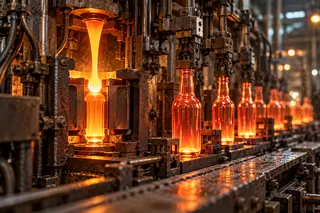
Large glass plants run continuously and prefer long runs of each item, so they often serve big beverage and food companies directly. Smaller brands usually get better service from a supplier that consolidates bottles, closures and gift boxes in one shipment. Either way, ask where each item is produced and who is responsible for quality.
Should you buy from US glass bottle manufacturers or import?
Searches for glass bottles made in USA, American made glass jars and glass bottle manufacturers USA are common, and domestic sourcing has real advantages. It also has limits.
| Factor | Domestic (US or EU) source | Overseas source (for example China) |
|---|---|---|
| Lead time to your warehouse | Shorter; trucking only | Production plus several weeks of ocean freight |
| Stock range for small brands | Mainly standard shapes, often via distributors | Wide range of stock spirits, food and decor shapes |
| Custom molds and decoration | Available, often at higher volumes and prices | Commonly offered for small and mid-size runs |
| Unit price | Usually higher | Usually lower before freight and duty |
| Freight and duty | Low freight, no import duty | Ocean freight, import duty and customs costs |
| "Made in USA" claims | Possible if the bottle qualifies | Not possible for the glass itself |
Working with a China glass bottle supplier makes most sense for decorated spirits bottles, custom shapes and mixed shipments of bottles, closures and gift boxes. Many brands use both: a domestic source for fast-moving standard items and an import partner for decorated or custom bottles. If you import, budget for duty and freight using current figures for your country, and read our guide to shipping glass bottles from China.
What should you look for in a glass bottle supplier?
Judge suppliers on evidence, not on claims. These are the criteria that predict a good long-term partner:
- Product fit. Do they already make or stock bottles close to what you need, in your size range and glass grade? A supplier strong in spirits bottles may be weak in food jars, and the reverse.
- Realistic MOQs. The MOQ should match your volume. A low price on 100,000 pieces is no use if you need 5,000.
- Custom capability. Can they produce a mold from your drawing or a reference bottle, and supply samples before mass production?
- Decoration in-house or managed. Screen printing, decals, frosting, spray coating and hot stamping should be available and controlled, not left for you to arrange.
- Closures that fit. A supplier that also provides caps and corks reduces the risk of neck and closure mismatch. See the neck finish guide.
- Quality control. How is production checked against the approved sample, and what do you receive before shipment?
- Communication. Quick, specific answers with drawings and photos are a good sign. Vague answers to technical questions are not.
- Export experience. They should know Incoterms, export packing and the documents your customs broker will ask for.
Do you need a specialist for liquor, wine or jars?
Glass plants and suppliers tend to specialize, because each product family uses different molds, glass weights and finishes.
- Liquor bottle manufacturers focus on heavy bases, super flint glass, bar-top cork and ROPP finishes, and decoration such as screen printing and frosting. Shelf appeal matters more than weight.
- Wine bottle suppliers run high volumes of standard Bordeaux, Burgundy and sparkling shapes, mostly in green, amber and flint, with cork or screw-cap finishes. MOQs for stock wine bottles are often high.
- Glass jar manufacturers make wide-mouth containers by press-and-blow forming, with lug or screw finishes for food, candles and storage.
- Bottle cap manufacturers are usually separate companies. If your glass supplier also provides closures, ask whether caps are tested on the same neck finish.
A custom glass bottle manufacturer for spirits may not be the best source for jam jars, and the reverse. If you need several product types, either work with a supplier that covers all of them, or accept separate sources and manage the closure fit yourself. Mars Glass, for example, supplies spirits bottles, wine bottles, beverage and water bottles, oil bottles, glass jars, diffuser bottles, closures and gift boxes, so you can see the whole catalog in one place.
What questions should you ask a glass bottle manufacturer?
Send the same list to every candidate so you can compare answers side by side:
- Is this bottle a stock item, and is it in inventory or made to order?
- What is the MOQ for the bottle, the closure and each decoration step?
- What is the bottle weight, brimful capacity and capacity tolerance? Can you send the drawing?
- Which glass grade is used: flint, super flint or extra flint? Our guide to flint vs super flint vs extra flint glass explains the difference.
- How long do samples take, and what do they cost?
- What is the production lead time after sample approval? See glass bottle MOQ and lead times for typical ranges.
- How will production be checked against the approved sample, and will I receive photos and measurements?
- How are the bottles packed: cartons with dividers or pallets? How many per carton and per container?
- Which Incoterms do you offer, and from which port?
- What are the payment terms?
If your product is food or a beverage, also ask what documentation the supplier can provide for food-contact use in your market, and check the current requirements with your regulatory advisor.
What are the red flags when choosing a supplier?
- Prices far below every other quote for the same specification, with no explanation such as a lighter weight.
- No drawings, or reluctance to state the bottle weight and capacity tolerance.
- Refusal to send samples, or samples that differ from the photos.
- Unclear answers about where the bottles are made.
- Pressure to pay in full before sample approval on a custom project.
- Claims that cannot be checked, such as certificates that are not shown or customers that cannot be named even in general terms.
None of these alone proves a supplier is unreliable, but each deserves a follow-up question.
How do you test a new supplier before a big order?
Treat the first order as a test of the whole process, not just the bottle.
- Order stock samples first. Fill them with your product, apply your closure, and run them through your line.
- Start with a stock item. A first order on a stock bottle, perhaps with simple screen printing, shows how the supplier handles communication, decoration, packing and documents before you invest in a mold.
- Inspect on arrival. Count breakage, measure a random sample against the drawing, and compare decoration with the approved sample.
- Review the experience. Were updates on time? Were problems raised early? This tells you more about a future custom project than any brochure.
Once the first order goes well, a custom bottle is a much smaller risk. Our guide to designing a custom spirits bottle covers the next step, and the wholesale glass bottles buying guide explains how to write the specification and compare quotes.
Key takeaways
- Decide whether you need a factory, an export supplier or a local distributor; each fits a different order size.
- Domestic glass is faster to receive; imported glass usually offers more stock shapes and lower unit prices before freight and duty.
- Judge suppliers on product fit, realistic MOQs, custom and decoration capability, closures, quality control and communication.
- Ask every candidate the same questions and compare answers in one table.
- Test a new supplier with samples and a stock-item trial order before a custom mold.
How Mars Glass can help
Mars Glass is a Shanghai-based supplier of stock and custom glass bottles, jars, closures and gift boxes, with 127 stock items in 9 product families. We make custom molds from a drawing or reference bottle with samples before mass production, check production against the approved sample with photos and measurements, and ship from the Port of Shanghai on FOB, CIF or other Incoterms.
- See our customization options.
- Contact us for a quote within one business day.
Frequently asked questions
How do I find a glass bottle manufacturer?
Start with a clear specification and expected annual volume, then shortlist suppliers through trade shows, industry directories, referrals and supplier websites. Request quotes and stock samples from three to five candidates, compare them on the same specification, and place a trial order before committing to large volumes.
Are there glass bottle manufacturers in the USA?
Yes. The US has container glass plants, but most run very high volumes of standard bottles and jars for large beverage and food companies. Smaller brands often buy US-made glass through distributors, or import stock and custom bottles from manufacturers and suppliers in Asia or Europe.
What is the difference between a glass bottle manufacturer and a supplier?
A manufacturer operates the furnaces and forming machines that make the glass. A supplier or trading company sources from one or more plants and may add decoration, closures, packing and export services. Either can be a good partner; what matters is that they control quality and are clear about where products are made.
What is a typical MOQ from a glass bottle factory?
For stock bottles, MOQs commonly range from a few thousand to tens of thousands of pieces, or one pallet or container. Custom molds and special colors usually need larger runs, because a forming machine and furnace color change are set up for each production run.
Should I buy glass bottles from China?
China has a large container glass industry with a wide range of stock shapes and competitive pricing, especially for decorated spirits bottles and jars. Plan for ocean freight transit time, import duties and documentation, and approve samples before mass production. Confirm the current tariff situation for your country before you budget.