What are the main types of bottle caps?
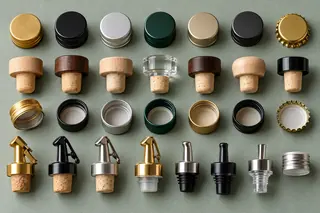
| Cap type | How it closes | Tamper evidence | Typical products |
|---|---|---|---|
| ROPP aluminum cap | Plain shell; thread rolled on by the capper | Breakaway band | Spirits, water, oil, wine |
| Pre-threaded aluminum screw cap | Screws onto a threaded neck | Optional band or seal | Minis, liquor, sauces |
| Aluminum-plastic GPI cap | Plastic inner thread, aluminum outer shell | Optional | Spirits, premium beverages |
| Plastic screw cap (PP/PE) | Molded thread | Often a breakaway band | Juice, water, dairy, food |
| Crown cap | Steel cap crimped over a bead | Inherent: bends on opening | Beer, soda, kombucha |
| Lug cap | Lugs engage short thread segments | Vacuum button on many lids | Jams, sauces, pickles |
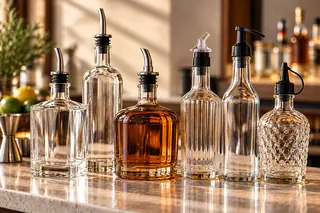
| Pourer cap | Screw or ROPP cap with a pouring insert | Often a band | Olive oil, vinegar, syrups |
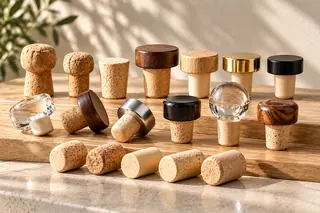
| Cork or bar-top stopper | Friction fit in the bore | Needs a capsule or seal | Wine, spirits, liqueurs |
Corks and bar-tops are a world of their own; see our cork stoppers guide. Pouring inserts for bars are covered in the liquor pourers and pour spouts guide.
How do you know which cap fits a glass bottle?
The neck finish decides the cap. A finish code such as 28-400 gives the thread diameter in millimeters and the thread style; ROPP, crown and lug finishes have their own specifications. Our guide to bottle neck finishes explains how to read these codes and match caps by drawing, so we will not repeat it here.
The short version: get the finish drawing for the bottle, get the cap drawing from the closure supplier, and test samples of both together with your product.
What are the standard bottle cap sizes?
| Finish / cap size | Approx. inches | Common use |
|---|---|---|
| 18–22 mm screw | 0.71–0.87 in | Miniatures, sauces, small bottles |
| 26 mm crown | 1.02 in (cap about 1.26 in across) | Beer, soda, kombucha |
| 28 mm screw or ROPP | 1.10 in | Water, juice, spirits, beverages |
| 30 mm ROPP | 1.18 in | Spirits |
| 30 × 60 mm long-skirt screw cap | 1.18 × 2.36 in | Wine |
| 31.5 × 24 mm | 1.24 × 0.94 in | Olive oil and vinegar, often with a pourer |
| 33 mm GPI | 1.30 in | Spirits with a wider neck |
| 38 mm screw | 1.50 in | Juice, milk, dairy |
| 43–82 mm lug or screw | 1.69–3.23 in | Food jars |
Cap size is always the neck size, not the visual size of the cap. A tall decorative spirits cap and a plain beverage cap can both be 28 mm.
How big is a bottle cap?
A standard crown cap is roughly 32 mm (1.26 in) across and about 6 mm (0.24 in) tall, with a fluted skirt of 21 teeth, for a 26 mm crown finish. A standard 28 mm ROPP beverage cap is commonly about 18 mm (0.7 in) tall, spirits versions often have taller skirts, and long-skirt wine caps are about 60 mm (2.36 in) to cover most of the neck.
Which liner should a cap use?
The liner is the seal between cap and glass. Common options:
- PE foam or EPE: general beverages, water, spirits.
- TPE: good resilience, often used in ROPP caps for spirits and water.
- Tin-foil or PVDC barrier liners: very low oxygen transmission, used in wine screw caps and oxygen-sensitive products.
- Plastisol (lug caps): forms a hermetic seal on food jars during hot fill or heat processing.
- Induction seal foil: bonded to the rim after capping for tamper evidence and leak resistance.
Alcohol, oils and acids can attack the wrong liner. Ask for compatibility data and test with your product, including warm storage and inverted storage.
Which bottle caps suit each product?
- Beer, soda and kombucha: 26 mm crown caps on crown-finish bottles, such as our 330 ml glass soda bottle with 26 mm crown finish. Crowns hold carbonation well and are inexpensive.
- Spirits and liquor: ROPP aluminum caps, aluminum-plastic GPI caps or bar-top stoppers. A 28 mm aluminum ROPP spirits cap with PE liner is a common volume choice, and GPI 28-400 and 33-400 aluminum-plastic caps give a metal look on a pre-threaded neck. Mini liquor bottles usually take 18–28 mm aluminum screw caps.
- Wine: long-skirt screw caps or corks, decided by the bottle finish.
- Olive oil, vinegar and syrups: 31.5 × 24 mm caps with pourer inserts for clean pouring and, in some markets, non-refillable fitments.
- Juice, milk and water: 28 mm or 38 mm plastic or aluminum screw caps, with a breakaway band for tamper evidence.
- Jars: lug caps, continuous-thread screw lids or two-piece lids.
What should you know about lids for jars?
Jar lids follow the same rule: the lid must match the jar's finish. Lug lids turn about a quarter-turn and are the standard for hot-filled jams, sauces and pickles; continuous-thread lids need more turns and suit dry goods and cosmetics. An aluminum screw jar lid with BPA-free liner is one option for screw-thread food jars.
Replacement lids for glass jars only seal if they match the diameter and thread system. For home canning, follow tested processing instructions from an authoritative home canning source: processing times depend on the food, jar size and altitude, and single-use sealing lids should not be reused for heat processing.
Do you recycle bottle caps?
Metal caps and lids are recyclable as metal, and glass is endlessly recyclable, but recycling rules are local. Small, loose caps can fall through sorting screens, so some programs ask consumers to remove caps, collect them, or leave lids attached. Plastic caps follow different rules again. If you print recycling instructions on your label, confirm the current guidance for each market.
How do you buy bottle caps wholesale?
Buying caps and bottles from one supplier reduces the risk of mismatch. Before you order bulk bottle caps:
- Confirm the finish drawing and the cap drawing match.
- Choose the liner for your product.
- Check your capping equipment: ROPP needs roller heads sized to the cap; crown caps need a crowner; screw caps need a chuck capper set to the right torque.
- Test application and removal torque, leakage and appearance on real samples.
- Lock the approved bottle and cap combination in your purchase order.
Order closures with a margin over your bottle count. Capping lines reject a small share of caps during setup and running, and a short supply of caps can stop a filling run even when glass is on hand. Store caps in their sealed cartons in a clean, dry area, because dust and moisture on liners can affect the seal.
Can bottle caps be customized?
Yes. Aluminum caps can be produced in custom colors, printed on the top and side, and embossed with a logo, and aluminum-plastic caps can carry a decorated metal shell. Custom caps usually have higher minimums than stock caps; many aluminum ROPP and GPI caps in our range list an MOQ of 50,000 pieces, while some pourer caps and stoppers start lower. Bar-top stoppers can be customized with wood, glass or metal heads.
Plan cap color with the bottle decoration and label, and approve a physical sample, because colors on aluminum can look different from screen proofs.
Key takeaways
- Bottle caps for glass include ROPP, screw, aluminum-plastic, crown, lug and pourer caps, plus corks and stoppers.
- The neck finish, not the look of the cap, decides fit; always match by drawing.
- The 26 mm crown and 28 mm screw or ROPP caps are the most common beverage and spirits sizes.
- The liner matters as much as the cap; test it with your actual product.
- Custom colors, printing and embossing are possible, usually at higher MOQs than stock caps.
How Mars Glass can help
Mars Glass supplies glass bottles and jars with matched caps from Shanghai, and stock samples are available so you can test fit and torque before ordering. We quote within one business day.
- Browse caps and closures
- Find a cap for your bottle with the closure finder
- Request matched bottle and cap samples
Frequently asked questions
What are the main types of bottle caps?
The main types for glass are pre-threaded screw caps (metal or plastic), ROPP aluminum caps rolled onto the neck during capping, crown caps crimped over a bead, lug caps for jars, and stoppers such as corks and bar-tops. Pourer caps and swing-tops are specialty variants.
What size is a standard bottle cap?
A standard beer or soda crown cap fits a 26 mm crown finish and measures roughly 32 mm (1.26 inches) across its fluted skirt. Screw caps for beverages and spirits are most often 28 mm, while jar lids range from about 43 mm to 82 mm and more.
How do I measure a bottle cap size?
Measure the outside diameter of the bottle's thread in millimeters with calipers; that is the first number in a finish code such as 28-400. Then confirm the thread style or closure system, because two necks with the same diameter can take different caps.
Do you recycle bottle caps?
It depends on your local program. Metal caps and lids are recyclable as metal, but small loose caps can fall through sorting equipment, so some programs ask you to collect them or leave lids on containers. Check your local rules.
How do you reseal a jar?
For a regular screw or lug lid, wipe the rim and threads clean and turn the lid back on firmly. Vacuum-sealed lids from heat processing are designed to seal once, so after opening they keep the jar closed but no longer give a sealed, shelf-stable pack.
What is an induction seal?
An induction seal is a foil liner inside the cap that is bonded to the rim of the container by an induction sealing machine after capping. It gives a tamper-evident, leak-resistant seal that the consumer peels off on first use.