What are the options for branding a glass bottle?
There are four main choices, and each makes sense at a different scale.
| Option | Look | Durability | Setup | Best order size | Change design easily |
|---|---|---|---|---|---|
| Paper label | Classic, textured, can be embossed or foiled | Low to medium; wet-strength options exist | Very low | Any, including very small | Yes |
| Film label (BOPP, clear or white) | Clean; clear film gives a near no-label look | High, waterproof | Low | Small to large | Yes |
| Shrink sleeve | 360° full color, covers the shape | Medium to high | Medium | Medium to large | Moderately |
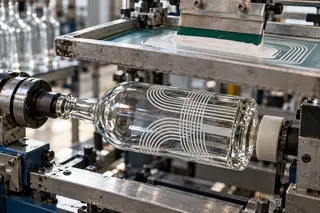
| Screen printing or decal on glass | Permanent, premium, part of the bottle | High to very high | Medium to high per design | Medium to large, one design | No, design is fixed at order |
Direct printing processes are explained in depth in our screen printing on glass guide, and the full set of decoration methods is compared in our decoration methods guide.
When are bottle labels the better choice?
Custom bottle labels are the right answer in more situations than many new brands expect:
- Many SKUs. A gin range with five flavors can use one plain bottle and five labels instead of five printed bottle orders.
- Small or uncertain volumes. Labels can be reprinted in hundreds or thousands; printed glass follows the bottle production run.
- Frequent changes. Batch numbers, vintages, harvest dates, limited editions and new regulatory text are easy on a label.
- Multiple markets. Each market may need its own language, importer address or warning text.
- Textured, paper-led designs. Embossed paper, foil and tactile varnish create a craft look that printing on glass does not replicate.
Labels also allow personalization. Bottle labels personalized for weddings, corporate gifts or private label customers are printed digitally in very short runs, which no direct glass process can match.
When is direct printing on glass worth it?
Direct printing pays off when your bottle design is stable and the volume is there:
- One design, long runs. The setup cost is spread over many bottles, and you no longer buy, store and apply label stock.
- Wet conditions. Ice buckets, bar wells, refrigerators and condensation do not affect fired ceramic or well-cured organic prints.
- Premium positioning. A no-label look reads as more expensive, especially on clear super flint glass.
- Reusable bottles. Fired ceramic prints survive repeated washing, so the brand stays on the bottle for its whole life.
- Recycling. Ceramic enamel fuses into the glass and goes back into the melt with the cullet, with no label or adhesive to remove.
The trade-offs are a fixed design, setup costs for each artwork, and the fact that a design error is printed on every bottle. Approve a physical sample before production.
How do you compare the cost per bottle?
Compare the total cost of each route, not only the price of the label or the print. For labels, add the label stock, the labeling machine or hand labor, waste from misapplied labels and the storage of label rolls for each SKU. For direct printing, add the setup for each design and color, and spread it across the order quantity.
A simple worked method helps. Divide the printing setup cost by the number of bottles in the run, add the per-bottle print price, and compare that with the label price plus application cost per bottle. As the run grows, the setup share shrinks, so there is a volume above which printing costs the same or less. Below it, labels win.
Repeat the calculation for your reorder quantity too. A repeat run of an existing design can cost less to set up than the first, especially if the screens are kept, so ask how setup is charged on reorders.
Do printed bottles still need a label?
Often they do. Alcohol, food and beverage labels must carry mandatory information, such as product type, alcohol content, net contents, health warnings, producer or importer details and allergens. The exact list depends on the product and the market.
Regulators generally treat text printed or embossed on the glass as part of the label, so printed bottles go through the same approval process as paper labels where approval is required. Because mandatory text changes more often than brand artwork, many brands print the logo and design on the glass and keep a small back label or neck label for regulatory text. Confirm current requirements with the authority in each market before you print.
What size should a bottle label be?
Label size is set by the bottle, not by a standard. Measure two things on the bottle drawing:
- Label panel height — the straight part of the wall between the heel and the start of the shoulder curve. Leave a few mm of margin at the top and bottom.
- Circumference — π × diameter. A 76 mm (3.0 in) diameter bottle has a circumference of about 239 mm (9.4 in). Front labels often cover up to roughly a third to a half of it.
| Bottle | Typical front label range | Notes |
|---|---|---|
| 750 ml wine (Bordeaux or Burgundy) | About 3–4 in wide × 4–5 in tall (76–102 × 102–127 mm) | Standard wine bottle label size varies by bottle; add a back label for mandatory text |
| 750 ml spirits | Varies widely by shape; square bottles give flat panels | Measure each flat face separately |
| 50 ml mini liquor bottle | Often about 1–2 in (25–50 mm) wide | Small panels limit text size |
| Small spice or jam jar | Front label or lid-top label | Wide jars can take a wrap label |
For mini bottle labels and small wine bottle labels, check the minimum legal text height for mandatory information before you shrink the design. Our mini liquor bottles guide covers those formats.
Which labels hold up best on glass?
Labels for glass bottles must deal with condensation, curved surfaces and sometimes ice water. Practical rules:
- Waterproof labels for bottles are usually BOPP film with a permanent adhesive. Clear film on clear glass gives a near no-label effect at low cost.
- Wine labels often use wet-strength paper designed for ice buckets, sometimes with embossing and foil.
- Apply to clean, dry, room-temperature glass. Cold bottles straight from storage collect condensation, which ruins adhesion.
- Choose adhesive for the fill. Cold-fill, hot-fill and refrigerated products need different adhesives.
- Keep labels off seams and curves. Mold seams and shoulder curves cause wrinkles and lifting edges.
If labels keep lifting in ice buckets, that is often the signal that direct printing or a film label is the better route.
Are shrink sleeves a good alternative?
Shrink sleeves for bottles give full-color coverage of the whole bottle, including curves that paper labels cannot follow. They suit bold graphics, seasonal designs and promotions on stock bottles. The downsides are that they hide the glass, which removes much of the reason to use premium glass, and they should be designed with a perforation or removable film to support recycling. A bottle wrapper made of paper is a lower-tech option for gift editions.
How do jar labels compare with printed jars?
Jars follow the same logic. Custom labels for jars suit honey, jam and spice producers with many flavors and seasonal batches. Spice jars with labels are usually sold with a printed name label on the front or on the lid top, so each SKU can change without changing the jar. Our square glass spice jar, 240–320 ml has flat faces that take labels easily, and our spice jars guide covers lids and sizes.
Direct printing on jars makes sense for a branded jar used across a whole range, such as a candle brand with one jar design.
Key takeaways
- Labels are cheaper and more flexible for small runs, many SKUs and changing information.
- Direct printing gives a permanent premium look and pays off on one design in volume.
- Many brands print brand artwork on the glass and use a small label for regulatory text.
- Size labels from the bottle drawing: straight wall height and circumference.
- Use film labels or wet-strength paper where bottles meet ice or condensation.
How Mars Glass can help
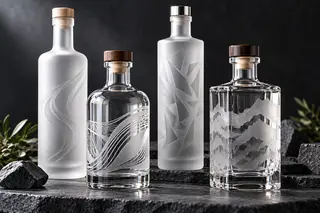
Mars Glass supplies plain stock bottles ready for your labels, and decorates bottles by screen printing, decals, frosting, spray coating, hot stamping and embossing when you move to direct printing. Send us your bottle drawing or label artwork and we will help you compare both routes.
- Screen-printed clear liquor bottle with cork, 500–750 ml
- Round super flint spirits bottle with screw cap, 750 ml
- Ask for a labeled vs printed quote
Frequently asked questions
What is the standard wine bottle label size?
There is no single standard, but front labels on a 750 ml wine bottle are commonly about 3 to 4 in (76 to 102 mm) wide and 4 to 5 in (102 to 127 mm) tall. The usable size depends on the straight wall height and diameter of your bottle, so measure the label panel on the actual bottle drawing.
Are bottle labels waterproof?
Film labels such as BOPP with a permanent adhesive are waterproof and hold up in ice buckets and refrigerators. Paper labels can be made more resistant with wet-strength paper, varnish or lamination, but standard paper labels will wrinkle or peel when soaked.
Is it cheaper to label or screen print bottles?
For small runs and many designs, labels are usually cheaper because they need little setup and can be changed easily. For one design running in large volumes, direct printing can compete on cost and removes label stock and application. Compare total cost per bottle, including labeling labor or equipment.
Do printed bottles still need a label?
Often yes. Mandatory information such as alcohol content, net contents, warnings and importer details may change by market, so many brands print the brand artwork on the glass and add a small back label for regulatory text. Regulators generally treat text printed on the glass as part of the label too, so confirm the rules for your market.
What labels work best on glass spice jars?
Small waterproof film or coated paper labels on the jar front or lid top work well, and they let you change the spice name for each SKU. Direct printing only makes sense when one design runs in large volumes, such as a branded spice range.
What are shrink sleeves for bottles?
Shrink sleeves are printed plastic film tubes that are placed over the bottle and shrunk with heat so they fit the shape. They give 360° full-color coverage, even over curves, but they hide the glass and need to be removed or designed for separation to help recycling.