What size candle jars do brands use?
Candle sizes are almost always stated as net wax weight, not jar volume. Soy and paraffin waxes weigh roughly 0.9 g/ml when solid, so the jar needs more volume than the ounce figure suggests, plus space between the wax surface and the rim.
| Candle size (wax) | Wax volume (approx.) | Jar brimful capacity | Typical diameter | Wicks (typical) |
|---|---|---|---|---|
| Mini 2–3 oz (57–85 g) | 65–95 ml | 80–120 ml (2.7–4 fl oz) | 50–65 mm (2–2.6 in) | 1 |
| 4 oz (113 g) | about 125 ml | 140–160 ml (4.7–5.4 fl oz) | 55–70 mm (2.2–2.8 in) | 1 |
| 8 oz (227 g) | about 250 ml | 270–310 ml (9–10.5 fl oz) | 70–85 mm (2.8–3.3 in) | 1–2 |
| 12–14 oz (340–400 g) | 380–440 ml | 420–500 ml (14–17 fl oz) | 80–95 mm (3.1–3.7 in) | 1–2 |
| 16–20 oz (454–567 g) | 500–630 ml | 550–700 ml (18.6–23.7 fl oz) | 90–110 mm (3.5–4.3 in) | 2–3 |
These are starting points. Wax blends, fragrance load and how close to the rim you pour all change the numbers, so fill a sample jar with your own wax before fixing the net weight on your label.
What makes a glass jar safe for candles?
A container candle keeps glass hot for hours, with a liquid melt pool at the top and cooler wax below. The jar must handle that steady heat and the temperature gradient without cracking.
Look for:
- Even wall thickness with no thin spots, seeds or stones in the glass
- A solid, flat base thick enough to protect the surface underneath
- Straight or gently tapered sides so the melt pool reaches the wall evenly
- A mouth at least as wide as the body, since narrow necks trap heat and soot
- Smooth, rounded rims that do not chip
Avoid thin drinking glasses and decorative glassware not intended for candles. Soda-lime glass designed for candles is the industry norm. Borosilicate glass resists thermal shock better but costs more and is rarely necessary when the wick is sized correctly.
How should you burn-test candle jars?
Burn testing is where a jar earns its place in your range. A simple protocol:
- Pour test candles with your exact wax, fragrance load, dye and wick.
- Burn in cycles of a few hours, letting the candle cool fully between burns.
- Watch flame height, soot, melt pool width and whether the wax tunnels.
- Check glass temperature at the side and base, especially near the end of the burn.
- Burn to the end with several candles, because the last stage is when glass runs hottest.
In the US, ASTM publishes voluntary candle fire-safety and warning label standards, and European EN standards cover candle fire safety and labeling. Confirm which standards and labeling rules your retailers and market expect, and keep test records.
Which colors and finishes work for glass candle jars?
The finish sets the look of a candle line. Common options:
- Clear flint: shows the wax and the flame; the standard for most ranges.
- Amber candle jars: colored in the glass, giving a warm apothecary look. See our amber glass bottles and jars guide.
- Frosted: a soft, diffused glow that hides pouring imperfections.
- Black candle jars and black matte jars: usually spray coated on the outside of clear glass.
- Pink, gold and other colors: spray coating, sometimes with a metallic or gradient finish.
- Logos: screen printing, hot stamping or decals.
Any coating must tolerate the heat of a burning candle without discoloring, peeling or cracking, so burn-test decorated jars, not only plain ones. Our glass decoration methods guide compares the options on cost and durability.
Which candle jar styles suit different candle lines?
Most ranges are built from a handful of jar styles. Pick the style first, then the size steps within it.
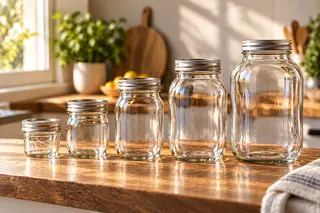
- Straight-sided tumblers: the most common container candle jar. They burn evenly, label easily and come in small, medium and large sizes that look like a family on shelf.
- Apothecary jars: shouldered jars with a wider body and a lid, often in amber or clear glass, for a classic or botanical look.
- Wide vessels and bowls: low, wide jars with two or three wicks for a fast, full melt pool and strong fragrance throw.
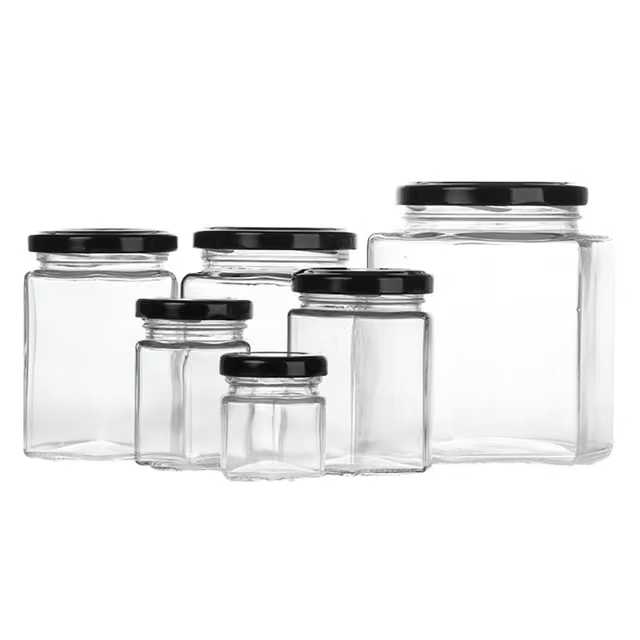
- Small candle jars and minis: 2–4 oz candles for sample sets, wedding favors, hotel amenities and discovery boxes.
- Large candle jars: 16 oz and above, usually multi-wick, as statement pieces for living rooms.
- Travel jars: compact glass jars with a lid that keeps wax and fragrance in while traveling.
Keep the same rim diameter across sizes where possible, so one lid style and one gift box insert design can serve several products.
Can customers reuse empty candle jars?
Yes, and many buyers expect to. Once the candle has burned to the recommended stopping point, leftover wax can be loosened with warm water or by freezing, and the jar can be cleaned and used for storage, plants or cotton pads. Some brands sell wax refills for their own jars. Glass is also widely collected for recycling, although wax residue and coatings should be removed according to local rules.
What lids do candle jars with lids use?
A lid protects the wax surface from dust, slows fragrance loss and makes the candle feel finished as a gift.
- Wooden or bamboo lids with a silicone ring: the most popular premium look.
- Metal lids, in gold, silver, black or brushed finishes.
- Glass lids or domes: an all-glass, apothecary style.
- Cork lids: natural and light.
Lids are fitted to the jar's outside rim diameter, and the friction ring must allow for the tolerance of the glass, so order lid and jar samples together.
What separates luxury candle jars from standard ones?
Luxury candle jars cost more because of glass and decoration, not volume:
- Heavier glass and thick bases that feel substantial in the hand
- Extra flint glass for higher clarity
- Custom shapes such as faceted, ribbed or tumbler forms, which need a custom mold
- Multi-step decoration: spray coating plus hot-stamped logos, or frosting plus screen printing
- Rigid gift boxes with inserts sized to the jar
If you plan a custom shape, our customization page explains how molds are made from a drawing or reference sample.
How do you buy candle jars wholesale?
For candle jars in bulk, write a specification that covers burning as well as looks:
- Brimful capacity, inside diameter and height, with tolerances
- Glass type and minimum wall and base thickness
- Color and decoration method, plus heat resistance of any coating
- Lid type, material and fit
- Packing: divided cartons protect decorated jars better than bulk pallets
Minimum orders depend on whether the jar is stock or custom and on the decoration. Our guides to glass MOQs and lead times and shipping glass from China explain the planning.
Candle brands often add reed diffusers to a home-fragrance range. Our square glass reed diffuser bottle and frosted square reed diffuser jar come in 50 to 250 ml.
Key takeaways
- Candle sizes are wax weight; an 8 oz candle needs a jar of about 270–310 ml (9–10.5 fl oz).
- Use evenly thick, straight-sided soda-lime jars made for candles, and burn-test the finished candle to the end.
- Wick count depends on inside diameter; jars above about 90 mm (3.5 in) often need two or three wicks.
- Black, pink and gold jars are usually spray coated; test decoration under heat.
- Specify capacity, dimensions, wall thickness, decoration and lid in writing before ordering.
How Mars Glass can help
Mars Glass, based in Shanghai, China, can quote candle jars as custom or sourced items, decorate them by spray coating, frosting, screen printing, decals or hot stamping, and supply matching gift boxes. We make samples before mass production and quote within one business day.
Frequently asked questions
What glass is safe for candle jars?
Container candles are normally poured into soda-lime glass jars made for candle use, with even wall thickness, a solid base and no thin spots. Thin drinking glasses and decorative glass not designed for sustained heat can crack. Whatever jar you choose, burn-test the finished candle through several full cycles before selling it.
How big is an 8 oz candle jar?
An 8 oz candle usually means about 8 oz (227 g) of wax, which takes up roughly 250 ml. The jar therefore needs a brimful capacity of about 270–310 ml (9–10.5 fl oz) to leave space at the top. Diameters of about 70–85 mm (2.8–3.3 in) are common at this size.
Do candle jars need to be heat resistant?
Yes. The glass sits next to a melt pool and flame for hours, so it must tolerate steady heat and the temperature difference between the hot top and the cooler base. Candle-grade soda-lime jars handle this when the wick is sized correctly; borosilicate is more heat-shock resistant but costs more and is rarely necessary.
Can you paint or color glass candle jars?
Yes. Black matte, pink, gold and other colors are usually applied by spray coating the outside of clear jars, and frosting gives a translucent look. The coating must tolerate the heat of a burning candle, so test colored jars to the end of the burn. Amber jars are colored in the glass itself.
What lids are used on candle jars?
Common candle jar lids are wooden or bamboo lids with a silicone ring, metal lids, glass lids and cork stoppers. A lid keeps dust off and slows fragrance loss between burns, and it doubles as a snuffer when placed on a jar after the flame is out, if the design allows.
How many wicks does a candle jar need?
It depends mainly on the jar's inside diameter, the wax and the fragrance load. Jars up to about 75–85 mm (3–3.3 in) across often burn well with one wick, while wider jars of 90 mm (3.5 in) and more often need two or three. Confirm by burn testing rather than by rule of thumb.