Why is amber glass used for light-sensitive products?
Light carries energy that can trigger chemical reactions in a product. Ultraviolet light and short-wavelength visible light, roughly from 300 to 500 nm, cause most of this damage. Typical effects include:
- Beer and hop-based drinks — light reacts with hop compounds and riboflavin to create a "light-struck" or skunky off-flavor, sometimes within hours in strong light.
- Essential oils, tinctures and extracts — aroma compounds oxidize and lose strength.
- Medicines and supplements — some active ingredients degrade under light, which is why pharmacies have long used amber containers.
- Oils, syrups and natural colors — flavor and color fade faster in clear glass under shop lighting.
Amber glass filters out most of this range, while still letting enough light through to see the fill level.
Exposure is often greater than producers expect. Bottles sit for weeks under store lighting, in refrigerated displays with bright lights, or near windows in cafes and farm shops. Products that taste fine at the filling line can change before they are opened. If a product is sold in clear glass today and you see color fading or off-flavors in older stock, light is a likely cause worth testing.
How is amber glass made?
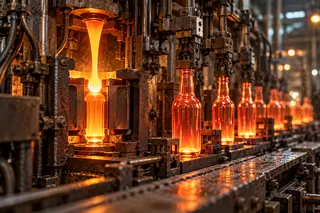
Amber color comes from the glass recipe. Iron and sulfur compounds, combined under "reducing" furnace conditions often controlled with a carbon source, form a chromophore that absorbs UV and blue light. Because the color is part of the glass, it does not peel, scratch or wash off like a coating.
The shade depends on the recipe, furnace conditions and wall thickness, so amber from two factories, or two runs, can look slightly different. For a consistent shelf, approve a color sample and ask the supplier to check production against it. Our flint vs super flint vs extra flint guide explains how glass grades and colors are specified.
How does amber compare with clear, green and blue glass?
| Glass color | UV and blue-light protection | Product visibility | Typical uses |
|---|---|---|---|
| Amber (brown) | High | Low to medium; fill level visible | Beer, kombucha, medicines, oils, extracts, candles |
| Green (dark or antique) | Medium | Medium | Wine, olive oil, some beer |
| Cobalt blue | Low to medium; passes much blue light | Medium | Cosmetics, specialty and decorative |
| Flint (clear) and super flint | Low | High | Spirits, water, juice, food where color sells |
| Flint with opaque spray coating | High, depends on coating | None | Brand colors with light protection |
Amber gives the best light protection among standard container glass colors. If your brand needs clear glass for appearance, an opaque spray coating or an outer carton can add protection instead.
Two common assumptions are worth correcting. Frosted glass looks protective, but frosting mainly scatters light rather than blocking UV, so a frosted clear bottle protects only slightly better than a clear one. Dark green glass helps, but it still passes more of the damaging range than amber, which is why many brewers who care about light-struck flavor choose brown bottles.
What are amber glass bottles used for?
- Beverages. Beer, kombucha, cold brew coffee, functional shots and some juices. See our kombucha bottles guide for flip-top and crown options.
- Pantry products. Olive oil, vinegar, syrups, vanilla extract and specialty sauces. Our amber or green glass bottle, 250–750 ml is a stock option for oils and syrups.
- Wine. Some still wines use amber Bordeaux bottles, such as our Bordeaux-style bottle in super flint or amber, 187–750 ml.
- Health and beauty. Essential oils, tinctures, serums and pharmacy products, often in small Boston rounds with droppers or sprayers.
- Home fragrance. Amber reed diffuser bottles and candle jars give a warm, apothecary look. Our square glass reed diffuser bottle, 50–250 ml is available in amber.
What sizes do amber Boston round bottles come in?
Amber Boston round glass bottles are the classic pharmacy and lab shape: a round body, rounded shoulders and a short neck. North American sizes are named in fluid ounces, and each size usually pairs with a standard GPI neck finish.
| Nominal size | Capacity | Common neck finish |
|---|---|---|
| 1/2 oz | 15 ml | 18-400 |
| 1 oz | 30 ml | 20-400 |
| 2 oz | 60 ml | 20-400 |
| 4 oz | 120 ml | 22-400 |
| 8 oz | 240–250 ml | 24-400 |
| 16 oz | 480–500 ml | 28-400 |
| 32 oz | 950–1,000 ml | 33-400 |
These are common pairings, not universal rules, so always confirm the finish on the bottle drawing. Our bottle neck finishes guide explains codes such as 20-400 and 28-400. 1oz amber glass bottles and other small amber glass bottles are usually sold with droppers, sprayers or phenolic caps; we do not stock dropper assemblies, but they can be quoted as a sourced item with the bottle.
What about amber glass jars with lids?
Amber glass jars suit creams, balms, bath salts, herbs, supplements, candles and pantry goods that need light protection. Common formats:
- Small round jars of 30 to 100 ml (1 to 3.4 fl oz) for cosmetics and samples. Our small round glass jar with screw cap, 50–90 ml is listed in flint or amber.
- Straight-sided jars of 120 to 500 ml (4 to 17 fl oz) for food, candles and supplements.
- Amber glass canisters of 1 liter (34 fl oz) and up for loose tea, coffee and dry goods.
Lids are usually metal or plastic screw caps with liners; black, gold and natural wood lids are popular for amber. Match the liner to the product, for example an oil-resistant liner for balms.
Where do large amber glass bottles fit?
Large amber glass bottles include half-gallon growlers (64 fl oz, about 1.89 L), 1 gallon jugs (about 3.79 L) and large lab or chemical bottles. They are useful for draft beer refills, bulk extracts and home brewing. We do not list these sizes as stock items, but they can be quoted as custom or sourced items. For stock amber items, our listed range runs from small jars up to 750 ml bottles.
How do you buy amber glass bottles wholesale?
Amber glass bottles wholesale and bulk amber glass jars are bought much like any other stock glass, with a few color-specific checks:
- Shortlist stock shapes offered in amber. Not every mold runs in every color, and some shapes are only available in amber as a custom run with a higher MOQ.
- Approve the shade with a physical sample and keep a retained reference.
- Check light protection needs. Thin walls give a lighter shade and less protection than thick walls.
- Plan decoration. White, gold and silver printing and hot stamping stand out on amber; dark inks do not.
- Order matched closures and test seal and torque with your product.
Amber glass is fully recyclable and collected as its own color stream in many systems. Our sustainable glass packaging guide covers recycled content and lightweighting.
Does amber glass cost more than clear glass?
Usually not by much. Standard amber and standard flint glass are both high-volume colors, and prices depend more on bottle weight, shape and order size than on color. Super flint and extra flint glass, which need low-iron raw materials, typically cost more than either. The bigger cost difference comes from availability: if the shape you want only runs in flint, an amber run may mean a custom order with a higher MOQ.
Key takeaways
- Amber glass bottles and jars block most UV and much blue light, the range that damages light-sensitive products.
- The color is part of the glass, so protection is permanent and the glass stays inert and recyclable.
- Amber protects better than green, blue or clear glass; coatings or cartons can protect clear glass instead.
- Boston round sizes from 1/2 oz to 32 oz pair with common finishes such as 20-400 and 28-400.
- Approve the amber shade with a physical sample, because it varies by factory and wall thickness.
How Mars Glass can help
Mars Glass supplies stock amber bottles and jars, including oil bottles, Bordeaux wine bottles, small jars and reed diffuser bottles, and can quote other shapes in amber as custom items. Stock samples are available, and MOQs are listed on each product page.
Frequently asked questions
Why are some glass bottles amber or brown?
Amber glass blocks most ultraviolet light and much of the blue light that can degrade products such as beer, medicines, essential oils, extracts and some foods. The color comes from iron and sulfur compounds formed in the glass melt, so the protection is part of the glass and does not wear off.
Is amber glass the same as brown glass?
Yes. Amber and brown glass are names for the same type of container glass. The exact shade varies between factories and with wall thickness, from light honey to dark brown, so approve a color sample for your order.
Does amber glass block UV light completely?
No glass blocks all light, but amber blocks most UV and a large share of visible light below roughly 450 nm, which is the range that causes most light damage. It protects much better than clear or green glass. For complete darkness, combine amber glass with an outer carton or an opaque coating.
Are amber glass jars safe for food?
Yes. Amber color is part of the glass itself, which is chemically inert like clear glass, so amber glass jars are used for foods, beverages and pharmaceuticals. Check that the lid and liner are also suitable for food contact in your market.
What size is a 1 oz amber glass bottle?
A 1 oz bottle holds about 30 ml (1 US fl oz is 29.57 ml). In the common Boston round style it usually has a 20-400 neck finish that takes dropper caps, screw caps or sprayers.
Can amber glass be recycled?
Yes. Amber glass is fully recyclable and is collected as its own color stream in many systems, where it is melted back into new amber containers. Keep labels and closures easy to remove to help sorting.