What makes a good kombucha bottle?
Kombucha is acidic, often carbonated and still alive. A good bottle has to handle all three.
- Designed for carbonation. Second fermentation builds pressure. Use bottles made for soda or beer, not decorative bottles or food jars.
- Round cross-section. Pressure spreads evenly in a round bottle. Square and flat bottles concentrate stress at corners and panels.
- Inert material. Glass does not react with acidic kombucha or absorb flavors, which is why most brewers prefer it.
- A reliable closure. The cap or stopper must hold gas and show tampering at retail.
- Light protection. Amber glass blocks more light than clear, which helps flavor stability.
For commercial brands, the bottle must also run on your filler and capper, fit your labeler and survive pallet shipping.
What sizes do kombucha bottles come in?
Retail kombucha has settled on a few sizes. Larger kombucha bottles are mostly used for growler-style refills and home brewing.
| Size | US fl oz (approx.) | Typical use |
|---|---|---|
| 175 ml | 5.9 fl oz | Tasting bottles, shots |
| 330 ml | 11.2 fl oz | European single serve |
| 355 ml | 12.0 fl oz | US single serve |
| 475 ml | 16.1 fl oz | The most common US retail size |
| 500 ml | 16.9 fl oz | Single serve, swing tops |
| 750 ml | 25.4 fl oz | Sharing bottles, premium ranges |
| 946 ml to 1 L | 32 to 33.8 fl oz | Large kombucha bottles, refills |
Our flint glass soda and kombucha bottle comes in 175, 355 and 475 ml, covering the common 12 oz and 16 oz US sizes plus a small tasting size. It is sold by the 40-foot high-cube container, which suits brands with steady volume.
Crown cap, swing top or screw cap: which is best for kombucha?
Each closure suits a different stage of business.
| Closure | Strengths | Watch out for |
|---|---|---|
| 26 mm crown cap | Low cost, proven for carbonation, fast to apply | Single use; needs a crowner |
| Swing top (flip top) | Reusable, resealable, no capper needed | Higher bottle cost; gaskets wear |
| Screw cap with carbonation liner | Resealable, consumer friendly | Must be rated for carbonated drinks |
| Plain screw cap or lug lid | Cheap, easy | Not suitable for fizzy kombucha |
Crown caps are the standard for commercial bottling. They are the same closure used on beer and soda, on a 26 mm crown finish. See our 330 ml soda bottle with a 26 mm crown finish or the crown-finish soda bottle in 6 to 16 oz.
Flip top bottles for kombucha are a favorite of home brewers and small producers who run refill programs. Our swing top bottles guide covers gaskets and sizes.
Should kombucha bottles be amber or clear?
Both are used, and the choice is partly branding.
- Amber glass blocks much of the ultraviolet and blue light that can affect flavor and the live culture over time. It looks craft and natural. Read more in our guide to amber glass bottles and jars.
- Clear (flint) glass shows the color of fruit and botanical flavors, which helps on a cold shelf. If you use clear glass, keep product in refrigerated cases away from strong light and keep shelf life realistic.
- Colored or coated glass such as green or a spray coating can create a distinct look; check that the coating handles condensation and wet ice buckets.
How much pressure can a kombucha bottle take?
There is no single safe number to quote, because it depends on the bottle design, wall thickness, closure, fill level and temperature. What is certain is that kombucha can carry on fermenting in the bottle, and pressure rises as the bottle warms.
To keep risk low:
- Use bottles designed for carbonated beverages, never decorative bottles, thin glass or food jars for fizzy batches.
- Control priming sugar and second-fermentation time. Measure, do not guess.
- Refrigerate finished bottles promptly. Cold slows fermentation and keeps more gas in solution.
- Leave consistent headspace on every fill.
- Test samples. Fill bottles from your production batch, store some warm, and check for leaks, gushing and breakage over the planned shelf life.
- Inspect bottles for chips and scratches. Damaged glass is weaker.
Reused bottles from other drinks are a common cause of failure in home brewing. Commercial brands should use new bottles with a known specification.
What jar do you need for brewing kombucha?
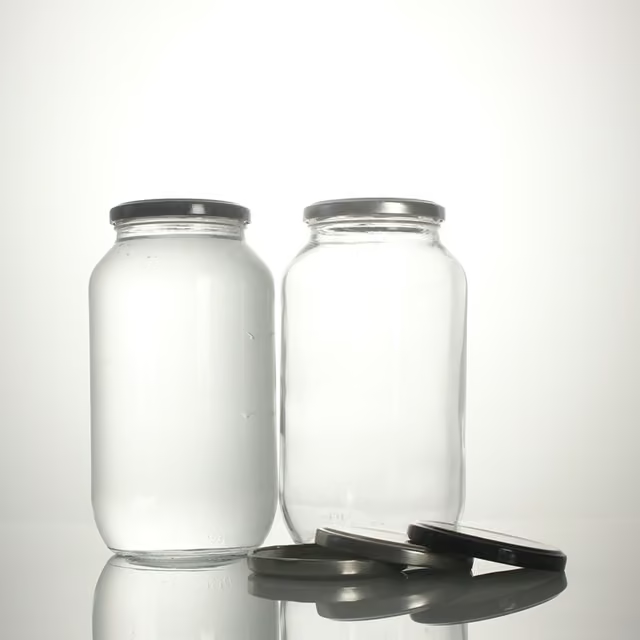
Brewing happens in a jar, not a bottle. The kombucha jar holds sweet tea, the culture and starter liquid during the first fermentation.
- 1 gallon glass jar for kombucha: The standard home batch size, 3.79 liters. It yields roughly six to seven 16 oz bottles after you keep back starter.
- 2 to 2.5 gallon jars: Popular for continuous brewing, often with a spigot near the base.
- Large fermentation jars of 3 to 5 gallons: Used by serious hobbyists and very small producers.
- Kombucha jar with spigot: Lets you draw finished kombucha without disturbing the culture. Choose a stainless steel or food-grade plastic spigot, because kombucha is acidic and can attack some metals.
A glass fermenting jar should have a wide mouth for adding the culture and a breathable cloth cover during the first fermentation, not an airtight lid. For recipe testing, smaller jars such as our clear glass mason jar in 680 to 1500 ml work well for pilot batches. Gallon and larger brewing jars can be quoted as sourced items.
What should kombucha brands check before ordering bottles?
Before you buy kombucha bottles wholesale, check:
- Regulation. In the US, kombucha sold as a non-alcoholic drink must stay below 0.5% alcohol by volume, and in-bottle fermentation can raise alcohol. Confirm the current rules for your market.
- Line fit. Ask for the bottle drawing and match height, diameter and neck to your filler, capper and labeler.
- Cap supply. Order crowns or screw caps with liners rated for carbonation, and test them with the bottle.
- Volume and freight. Kombucha bottles are often sold by the container. Our guide to shipping glass bottles from China explains how to plan landed cost.
- Decoration for cold, wet conditions. Kombucha lives in fridges and ice buckets, so labels must survive condensation. Screen printing directly on the glass avoids peeling labels and suits returnable programs, while waterproof film labels suit short runs and seasonal flavors.
- Samples and approval. Approve a production sample, then check bulk production against it.
Key takeaways
- Most retail kombucha comes in 12 oz (355 ml) or 16 oz (about 475 ml) round glass bottles.
- Use bottles designed for carbonated drinks; avoid square, decorative and reused bottles for fizzy batches.
- Crown caps suit commercial lines; swing tops suit refills and home brewing.
- Amber glass gives more light protection; clear glass shows color but needs careful storage.
- Brew in wide-mouth jars, usually 1 gallon or larger, with a cloth cover for the first fermentation.
- Control second fermentation, refrigerate finished bottles and test filled samples before production.
How Mars Glass can help
Mars Glass supplies crown-finish soda and kombucha bottles, swing top bottles and glass jars from Shanghai, with samples before mass production and quotes within one business day.
- Browse glass beverage bottles
- Compare crown-cap formats in our beer bottles guide
- Ask for kombucha bottle samples or a quote
Frequently asked questions
What are the best bottles for kombucha?
The best kombucha bottles are round glass bottles designed for carbonated drinks, closed with a crown cap, a swing top or a carbonation-rated screw cap. Amber glass gives more light protection, while clear glass shows the color. Test filled samples at your real carbonation level before you commit.
Can you use mason jars for kombucha second fermentation?
Mason jars are fine for brewing the first fermentation under a cloth cover, but they are not designed to hold carbonation. For second fermentation, use bottles intended for carbonated beverages so pressure does not build in a container that was not made for it.
Are swing top bottles good for kombucha?
Yes, swing top bottles are popular for kombucha because they reseal and are easy to reuse. Choose bottles intended for carbonated drinks, keep gaskets in good condition and avoid square or decorative shapes for fizzy batches.
What size jar do you need to brew kombucha?
Home brewers usually start with a 1 gallon (3.79 liter) glass jar, which yields about six to seven 16 oz bottles after you keep back starter liquid for the next batch. Larger 2 to 5 gallon jars, often with a spigot, suit continuous brewing.
Why do kombucha bottles explode?
Kombucha keeps fermenting in the bottle. If there is too much sugar, too much time at warm temperatures, or a bottle not built for pressure, gas can build beyond what the bottle can take. Refrigerate finished bottles and test your process with samples.
What size are commercial kombucha bottles?
Most retail kombucha in the US is sold in 12 oz (355 ml) or 16 oz (about 473 to 475 ml) glass bottles. Some brands sell larger 32 oz or 1 liter sharing bottles.