What are the standard liquor bottle sizes?
Alcohol bottle sizes are set by law in most markets, so the range is narrower than for juice or sauce bottles. The liquor bottle sizes chart below lists the sizes you will see on US and international shelves, with the trade names buyers and distributors use.
| Size (metric) | Common name | US fl oz | 1.5 oz shots (approx.) | Typical use |
|---|---|---|---|---|
| 50 ml | Miniature, nip, airplane bottle | 1.7 | 1 | Samples, minibars, gift sets |
| 100 ml | Small flask | 3.4 | 2 | Travel, tasting kits |
| 200 ml | Half pint | 6.8 | 4.5 | Convenience stores, flasks |
| 375 ml | Pint, half bottle | 12.7 | 8.5 | Trial size, lower price point |
| 500 ml | Half liter | 16.9 | 11 | Craft spirits, liqueurs, export |
| 700 ml | Standard EU bottle | 23.7 | 16 | EU, UK and many other markets |
| 750 ml | Fifth | 25.4 | 17 | Standard US full bottle |
| 1 L | Liter, 1 liter bottle | 33.8 | 22.5 | Duty-free, bars, some markets |
| 1.75 L | Handle | 59.2 | 39 | Value packs, bars, parties |
All conversions use 1 US fl oz = 29.57 ml. Spirit bottle sizes are the same for every category, so vodka bottle sizes, whiskey bottle sizes and tequila bottle sizes follow the same chart. What changes between categories is shape, glass weight and closure.
What size is a fifth of liquor?
A fifth is a 750 ml bottle holding 25.4 US fl oz. The name is a leftover from the time when US spirits were sold in fractions of a gallon: one fifth of a US gallon is 25.6 fl oz, or about 757 ml. When the US moved to metric spirits sizes in the late 1970s, the fifth became 750 ml, and the old name stuck.
So when someone asks how much is a fifth of vodka, or how many ounces are in a fifth of whiskey, the answer is the same: 25.4 oz. At a 1.5 oz pour that is about 17 shots; at a 1 oz pour, about 25.
For a brand, the 750 ml bottle is the default US format and the one with the widest choice of stock shapes. Our clear glass spirits bottles in 700 ml, 750 ml and 1 L are a typical example: the same design family in the three sizes most exporters need.
How big is a handle of liquor?
A handle is a 1.75 liter bottle, about 59.2 US fl oz. It is slightly smaller than a half gallon (64 fl oz, or 1.89 L), which it replaced when sizes went metric. The name comes from the molded grip that most of these bottles carry, because a full 1.75 L bottle is heavy and awkward to pour.
- How many oz in a handle of vodka: about 59.2 fl oz.
- How many shots in a handle of vodka: about 39 shots of 1.5 oz, or 59 of 1 oz.
- Handle of tequila or whiskey: the same 1.75 L volume; only the bottle design differs.
Many handles today are made in PET plastic to save weight. Glass handles still exist for premium value lines. Mars Glass does not stock a 1.75 L handle, but one can be quoted as a custom item if you supply a drawing or a reference bottle.
What is a 375 ml bottle called?
In the US liquor trade a 375 ml bottle is called a pint, even though a true US pint is 473 ml (16 fl oz). It is also called a half bottle, because it holds exactly half of a 750 ml. It contains 12.7 fl oz, or about 8.5 shots.
The 200 ml bottle has a similar naming quirk. It is called a half pint, although a real half pint is 236.6 ml (8 fl oz). It holds 6.8 fl oz.
Both sizes often come in a flat flask shape that fits a pocket or a narrow shelf. If you want one design across several sizes, our round glass liquor bottle with cork is offered in 50, 100, 200, 375, 500, 700, 750 and 1,000 ml, and the flat glass bottle for spirits covers 50, 200 and 250 ml. For the smallest sizes, see our separate guide to mini liquor bottles.
Why are bottles 750 ml in the US and 700 ml in Europe?
Each market sets its own list of permitted sizes, often called standards of fill.
- United States: the Alcohol and Tobacco Tax and Trade Bureau (TTB) sets authorized sizes for distilled spirits. For decades the list centered on 50 ml, 100 ml, 200 ml, 375 ml, 750 ml, 1 L and 1.75 L. TTB has since expanded the list, and it now includes 700 ml along with several other sizes.
- European Union: EU rules on nominal quantities for spirits have long made 700 ml the standard full bottle, alongside sizes such as 200 ml, 350 ml, 500 ml and 1 L.
- Other markets: many countries follow either the US or EU pattern. Duty-free channels often prefer 1 L.
Rules change, so confirm the current list for every market with your regulatory advisor or importer before you commit to a mold. If you export to both regions, two common approaches are a single 700 ml bottle (if allowed in all your markets) or a matched 700 ml and 750 ml pair with the same label panel height, so one label design fits both.
How tall is a 750 ml liquor bottle?
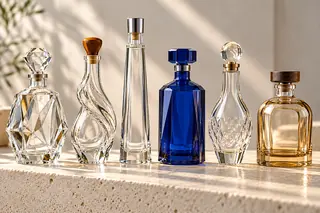
Bottle height depends on shape. A tall, slim vodka bottle and a squat whiskey bottle can both hold 750 ml but differ in height by several centimeters. These are typical ranges, not fixed standards:
| Size | Typical height | Typical body width or diameter |
|---|---|---|
| 50 ml | 90–120 mm (3.5–4.7 in) | 30–40 mm (1.2–1.6 in) |
| 200 ml | 140–180 mm (5.5–7.1 in) | 50–70 mm (2.0–2.8 in) |
| 375 ml | 170–240 mm (6.7–9.4 in) | 60–85 mm (2.4–3.3 in) |
| 750 ml | 250–330 mm (9.8–13 in) | 75–100 mm (3.0–3.9 in) |
| 1 L | 290–340 mm (11.4–13.4 in) | 85–105 mm (3.3–4.1 in) |
Before choosing, check the bottle drawing against three limits: your filling and capping machine (minimum and maximum height and diameter), the shelf or back-bar height at your key accounts, and your shipping carton. A bottle that is 10 mm too tall can force a new carton size.
How do 2 oz, 8 oz, 16 oz and 20 oz bottles convert to ml?
Searches for an 8 oz bottle, a 16 oz bottle or a 20 oz bottle usually come from beverage, sauce or craft buyers rather than distillers. Glass is made to metric capacities, so the nearest stock size is usually a rounded metric figure.
| US size | Exact ml | Nearest common glass size |
|---|---|---|
| 1 oz | 29.6 ml | 30 ml |
| 2 oz | 59.1 ml | 60 ml |
| 4 oz | 118.3 ml | 120 ml |
| 8 oz | 236.6 ml | 240–250 ml |
| 10 oz | 295.7 ml | 295–300 ml |
| 12 oz | 354.9 ml | 355 ml |
| 16 oz | 473.2 ml | 475–500 ml |
| 20 oz | 591.5 ml | 600 ml |
| 32 oz | 946.4 ml | 946 ml–1 L |
If your label must state an exact US volume, choose a bottle whose fill point matches it rather than a rounded size. Our capacity converter does these conversions in both directions. For jars in 2 oz, 4 oz, 8 oz and 16 oz sizes, see the mason jar sizes guide.
What should you check before choosing a bottle size for your brand?
The legal size is only the starting point. Before you place an order, run through these checks:
- Nominal vs brimful capacity. A 750 ml bottle holds more than 750 ml when filled to the brim. The difference is the headspace, which your filler and closure need. Ask for the brimful capacity and the fill height on the drawing.
- Closure and neck finish. Smaller sizes often use smaller finishes, such as 18 mm screw caps on minis, while 750 ml bottles commonly use bar-top cork, 28 mm ROPP or GPI 28-400/33-400 caps.
- Price ladder. Many brands launch a 750 ml and add a 375 ml or 50 ml later. Choosing a design family that comes in several sizes keeps the look consistent.
- Packing and freight. Larger bottles mean fewer pieces per carton and per container, which raises the freight cost per bottle.
- Order quantities. Each size is a separate mold set and production run, with its own MOQ. Our guide to glass bottle MOQs and lead times explains how this works.
If you plan a custom shape, decide on the size range at the design stage. Scaling a design from 750 ml down to 375 ml is not a simple proportional shrink; see designing a custom spirits bottle.
Key takeaways
- The standard US liquor bottle sizes are 50 ml, 100 ml, 200 ml, 375 ml, 750 ml, 1 L and 1.75 L.
- A fifth is 750 ml (25.4 fl oz, about 17 shots); a handle is 1.75 L (59.2 fl oz, about 39 shots).
- A 375 ml bottle is called a pint and a 200 ml bottle a half pint, even though neither matches a true US pint.
- The EU standard full bottle is 700 ml; confirm the permitted sizes for every market you sell in.
- Height and width vary by shape, so check bottle drawings against your filling line, shelves and cartons.
How Mars Glass can help
Mars Glass supplies stock and custom spirits bottles from Shanghai, with matching closures and gift boxes. Stock samples are available, and we quote within one business day.
- Browse all spirits bottles by size and shape.
- Contact our team with your target sizes and markets for a quote.
Frequently asked questions
How many ounces are in a fifth of vodka?
A fifth is a 750 ml bottle, which holds 25.4 US fluid ounces. The name comes from the old fifth of a US gallon (about 757 ml), which was replaced by the metric 750 ml size. The same applies to whiskey, tequila, rum and other spirits.
How big is a handle of liquor?
A handle is a 1.75 liter bottle, which holds about 59.2 US fluid ounces, a little less than half a gallon. It is called a handle because the large bottle usually has a molded grip. It holds roughly 39 standard 1.5 oz shots.
What is a 375 ml bottle called?
In the US liquor trade a 375 ml bottle is usually called a pint, even though a true US pint is 473 ml. It is also called a half bottle because it is half of a 750 ml. It holds 12.7 US fluid ounces, or about 8 shots.
How many shots are in a fifth of whiskey?
A 750 ml fifth holds about 17 shots when you pour the US standard 1.5 fl oz (44 ml) shot. If you pour 1 oz shots, the same bottle gives about 25 servings.
How many shots are in a handle of vodka?
A 1.75 liter handle holds about 39 shots of 1.5 fl oz each. With 1 oz pours, it gives about 59 servings.
Why are European liquor bottles 700 ml instead of 750 ml?
EU rules on nominal quantities for spirits have long centered on 700 ml as the standard full bottle, while the US historically required 750 ml. The US has since added 700 ml to its authorized sizes, but you should confirm the current rules for each market before choosing a size.